
Dental implants are designed to be a stable, long-term solution for missing teeth. So, if your implant feels loose, it can be concerning. The good news is that not all “looseness” means the implant itself has failed, but it does require prompt attention. Knowing what to do can help protect your oral health and prevent further complications.
Is It the Implant or the Crown?
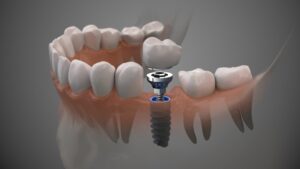
First, it’s important to understand that a dental implant has multiple parts. The implant post is anchored into your jawbone, and a crown is attached on top.
In many cases, the looseness comes from the crown or abutment (the connector piece), not the implant itself. This is often a simpler issue that your dentist can fix by tightening or replacing the component.
However, if the implant post itself is loose, it could be a more serious problem that needs immediate care.
Common Causes of a Loose Feeling
There are several reasons why your dental implant might feel loose. One possibility is mechanical—such as a loose screw or worn crown. Another concern is bone loss around the implant, which can occur due to infection or inflammation.
A condition called peri-implantitis can lead to swelling, bleeding gums, and gradual loosening of the implant if left untreated.
Excess pressure from teeth grinding or biting hard foods can also contribute to loosening over time.
What You Should Do Right Away
If your dental implant feels loose, don’t ignore it. Contact your dentist as soon as possible for an evaluation. Early intervention can often prevent more serious issues.
In the meantime:
- Avoid chewing on the affected side.
- Stick to soft foods.
- Keep the area clean by brushing gently and flossing carefully.
- Do not try to tighten or adjust anything yourself.
Attempting a DIY fix can make the situation worse.
How Your Dentist Will Help
Your dentist will examine the implant and may take X-rays to determine the cause of the problem. If it’s a loose crown or abutment, they can usually fix it quickly.
If there is infection or bone loss, treatment may involve deep cleaning, medication, or other procedures to restore the health of the surrounding tissue. In more advanced cases, the implant may need to be removed and replaced after healing.
Protecting Your Implant Long-Term
To prevent future issues, maintain good oral hygiene, attend regular dental checkups, and avoid habits like grinding your teeth or chewing on hard objects. Your dentist may recommend a nightguard if grinding is a concern.
A loose dental implant is not something that will resolve on its own. The sooner you address the issue, the better your chances of preserving the implant and avoiding more complex treatment. If something feels off, trust your instincts and seek professional care. Taking quick action can help keep your smile strong, secure, and healthy for years to come.
About the Author
Dr. Abdel A. More has dental degrees from both Cuba and the Virginia Commonwealth University. He also attended a 3-year residency in oral and maxillofacial surgery. Today, he is a proud member of the American Dental Association and the North Carolina Dental Association. Interested in getting dental implants? Book with us online or call our Matthews office at (704) 844-0556.